

Answering the “What business has a 90% success rate?” question, we list 10 low risk business ventures that are proven to succeed, that have high success rates, from ‘boring’ asset-based businesses (like laundromats) to high-profit digital services.
Introduction: The 90% failure myth
You’ve heard the terrifying statistic: “90% of startups fail.”
But here’s the secret: that statistic is misleading. It almost exclusively refers to high-growth, venture-capital-backed tech startups trying to become the next Google. It has almost nothing to do with “Main Street” businesses. The truth is, some business models are designed to be durable.
Before we start, we must define “success.” When we talk about a “high success rate,” we are not talking about a 90% chance of becoming a millionaire. For this article, we are using the most honest, data-backed metric: the 5-year business survival rate, as tracked by government bodies like the U.S. Small Business Administration (SBA).
This article is a guide to the business models that have the highest proven success rates. As you’ll see, the path to a high-success venture isn’t about a radical new idea; it’s about providing a clear service for a proven demand.
The businesses that rarely fail: The data on success rates
When you look at the data, a clear pattern emerges: the most durable businesses provide essential, hard-to-disrupt services. The SBA’s “Frequently Asked Questions About Small Business” report, which uses official data from the Bureau of Labor Statistics, shows the 5-year success rate for new businesses by industry.
The industries with the highest 5-year success rates are:
- Health Care and Social Assistance: 58.0%
- Real Estate and Rental/Leasing: 55.4%
- Agriculture, Forestry, Fishing, Hunting: 55.3%
- Mining, Quarrying, Oil & Gas Extraction: 55.0%
- Construction: 53.0%
- Utilities: 53.0%
- Manufacturing: 52.8%
- Professional, Scientific, & Technical Services: 50.7%
- Wholesale Trade: 50.1%
In stark contrast, high-risk, high-competition industries like Accommodation and Food Services (restaurants) have a 5-year success rate of only 35.6%.
10 Low Risk Businesses with High Success Rates
So how does a founder use this information? You choose a specific, “boring” business model that fits into one of those high-success industries.
Your business risk is dramatically reduced by operating a “tried and tested” business model that has a proven history of success. Here are 10 such business ideas, inspired by the data and experts like Cody Sanchez (Contrarian Thinking).
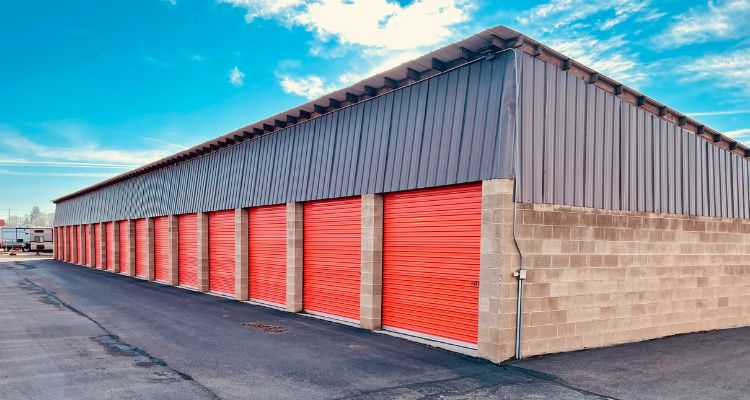
1. Self-Storage
- Industry: Real Estate, Rental, and Leasing (55.4% success rate)
- Why it Works: A high-margin real estate play. The “product” is an empty room, meaning very low operating costs, low labor, and predictable, recurring monthly revenue.
- Unit Economics (Range): CAPEX: $2M – $7M+ (high). Profit Margins: 40-50%.
- Key Risks: High initial capital, the risk of local oversupply (too much competition), and a slow fill-up rate.
2. Senior Care (Non-Medical)
- Industry: Health Care and Social Assistance (58.0% success rate)
- Why it Works: An essential service with a massive, growing customer base (the aging population). Non-medical home care has lower startup costs than a full facility.
- Unit Economics (Range): CAPEX: $80k – $150k.
- Key Risks: This is a complex business. It requires strict licensing and regulation, high staffing costs, and significant liability/insurance.
3. Laundromats
- Industry: “Other Services” (48.4% success rate, but a proven model)
- Why it Works: An essential, recession-proof service. It requires minimal labor and generates predictable cash flow. It’s a classic system-based business, as described in Michael E. Gerber’s The E-Myth Revisited.
- Unit Economics (Range): CAPEX: $200k – $500k. Profit Margins: 25-35%. Payback (est): 5-7 years. (Source: IBISWorld, industry data).
- Key Risks: High utility costs (water, gas), rent on a good location, and machine maintenance.
4. Rental Properties
- Industry: Real Estate, Rental, and Leasing (55.4% success rate)
- Why it Works: You are acquiring a hard asset that appreciates in value while generating monthly cash flow from tenants.
- Key Risks: Requires significant capital for a down payment, risk of bad tenants, and unexpected, high-cost repairs (e.g., new roof, new plumbing).
5. Car Washes
- Industry: “Other Services” (48.4% success rate)
- Why it Works: A simple, system-based business with high-profit margins. It can be semi-automated (like self-serve bays) and has a clear, repeatable process.
- Key Risks: High upfront cost for equipment and location, high water/utility bills, and local competition.
6. Transportation & Logistics (Local)
- Industry: Transportation & Warehousing (48.9% success rate)
- Why it Works: The essential “plumbing” of the economy. As long as people buy things online, there will be a need to move packages. This can be scaled from a single “last mile” delivery van.
- Key Risks: High fuel and insurance costs, driver shortages, and high competition on rates.
7. B2B IT Support (Consulting)
- Industry: Professional, Scientific, & Technical Services (50.7% success rate)
- Why it Works: This is the “low-risk” version of a modern service. Instead of chasing individual consumers, you provide an essential, high-margin service to other businesses on a monthly retainer.
- Unit Economics: Startup Cost: <$5,000. Profit Margins: 50%+.
- Key Risks: High competition and the “feast or famine” cycle of finding B2B clients.
8. Landscaping / Glass Cleaning
- Industry: Administrative & Support Services (47.1% success rate)
- Why it Works: A low-cost “tried and tested” model. You can start with minimal equipment (a lawnmower, a squeegee) and build a roster of recurring clients (homes, businesses).
- Unit Economics: Startup Cost: <$5,000.
- Key Risks: Labor-intensive (hard to scale past yourself), seasonal, and sensitive to local competition.
9. Vending Machine Routes
- Industry: Retail Trade (41.7% success rate)
- Why it Works: While “retail” is lower, this is a niche model. It’s a scalable, low-cost asset business. You aren’t paying for a full storefront, just the machine.
- Unit Economics (Range): CAPEX: $3k – $5k per machine.
- Key Risks: Finding good, high-traffic locations is difficult. It’s a low-margin, high-volume game.
10. Home Repair / Handyman Services
- Industry: Construction (53.0% success rate)
- Why it Works: This model, from The $100 Startup playbook, monetizes a skill you already have. It has almost no startup cost and high, immediate demand.
- Unit Economics: Startup Cost: <$1,000 (for tools you own).
- Key Risks: You are trading time for money. It’s difficult to scale past your own two hands without facing the challenges of hiring.
“The path to wealth is paved with boring businesses.” – Cody Sanchez
Final thoughts
The path to a high-success business isn’t a Silicon Valley moonshot. It’s not a high-risk tech idea. It’s about choosing the right model from the start.
The data shows that success isn’t about a radical, new-to-the-world invention. It’s about choosing a durable, essential, “tried and tested” model, often in a “boring” industry, and executing it well.
Of course, no business is a 100% guarantee. All success depends on your management, your location, your financing, and your due diligence.
Ready to model your new business idea?Download our complete Business Plan Template and Financial Plan Template to map out your costs and path to profit.
Frequently asked questions (FAQ)
- What business has a 90% success rate?
While that 90-95% number is often quoted for businesses like laundromats or self-storage, it’s not a verifiable government statistic. The most reliable, data-backed number is the 5-year survival rate from the SBA, which is the most honest measure of a high success rate. - What business has the highest success rate?
According to 2024 SBA data, Health Care and Social Assistance (58.0%) and Real Estate and Rental/Leasing (55.4%) have the highest 5-year success rates (survival rates) of all major industries. - What are the most profitable low-cost businesses?
As highlighted by Shopify, the most profitable businesses with low startup costs are skill-based services. This includes online consulting, tutoring, selling online courses, content creation, affiliate marketing, and event planning. - Why do “boring businesses” like laundromats rarely fail?
Their high success rate is built on three things: they provide an essential, low-cost service that people need even in a recession; they generate predictable cash flow; and they are simple systems (as described in The E-Myth) that do not depend on a “genius” founder to operate. - What industries have the lowest success rate?
According to 2024 SBA data, Accommodation and Food Services (restaurants) has one of the lowest 5-year success rates (35.6%), due to high overhead, intense competition, and low-profit margins.
References
- SBA (U.S. Small Business Administration), Office of Advocacy.. Frequently Asked Questions About Small Business, July 2024 https://advocacy.sba.gov/wp-content/uploads/2024/12/Frequently-Asked-Questions-About-Small-Business_2024-508.pdf
- IBISWorld. (2024). Laundromats in the US – Market Research Report (2015-2030) https://www.ibisworld.com/united-states/industry/laundromats/1729/
- Sanchez, C. (Contrarian Thinking). Boring Businesses. https://contrarianthinking.co/
- Shopify. (2025). 30+ Most Profitable Businesses to Start in India https://www.shopify.com/in/blog/most-profitable-businesses#:~:text=Most%20profitable%20businesses%20FAQ,-What%20is%20the&text=Ten%20types%20of%20businesses%20that,content%20creation%2C%20and%20event%20planning.
- Gerber, M. (1986). The E-Myth Revisited .https://www.amazon.com/Myth-Revisited-Small-Businesses-About/dp/0887307280
- Guillebeau, C. (2012). The $100 Startup. https://www.amazon.com/100-Startup-Reinvent-Living-Create/dp/0307951529