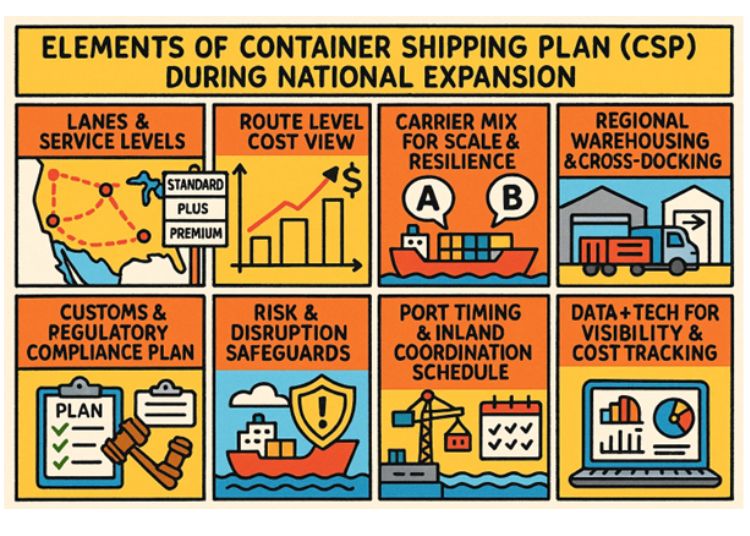
National expansion changes container shipping from local runs to a network puzzle. And not to forget, 2025 brings better rail visibility, port appointments, and clearer contract options, so planning gets sharper.
This piece breaks down what a plan needs to include. Carrier mix, lane design, rate tests, and risk controls. Warehousing, drayage, and customs handoffs. Technology that shows costs by route, not averages.
Curious if this can stay practical and affordable? Yes. Then read along for a roundup you can use as your checklist.
Map National Lanes and Service Levels
Most companies miss out when they use a one-size-fits-all shipping model. Segmenting routes by distance, frequency, and seasonal surges uncovers hidden costs and service gaps.
This detail lets planners compare modes like intermodal or expedited for each lane, not just the big picture. Good mapping shapes the entire container shipping plan or logistics playbook into something both strategic and actionable.
Build a Route Level Cost View
Every route holds its own price story, shaped by weather swings, demand peaks, and fuel changes. No two shipments face the same math at year’s end or peak summer.
Transparent cost breakdowns do more than satisfy accountants; they help sales teams quote with confidence and avoid billing surprises.
Let’s take California, for instance. Long Beach container transport providers lay out every charge by route and lane so clients see the full cost before they book.
Choose a Carrier Mix for Scale and Resilience
Putting all shipments with one carrier leaves gaps when demand spikes or weather hits.
Instead, blending asset-based haulers, regional specialists, and national names cushions against slowdowns or capacity crunches. It also gives negotiating power during rate changes.
Most teams find that a thoughtful mix turns shipping into a steady engine for growth, not just an expense.
Design Regional Warehousing and Cross-Docking
Scaling means you’ll need places in different areas to temporarily store or quickly turn around shipments.
Setting up cross-docks cuts travel time. It trims holding costs and helps trucks run with full loads. Meanwhile, well-chosen warehouse locations shorten final delivery runs and keep schedules predictable.
Using data to decide where these hubs should sit makes the whole network more flexible.
Plan for Customs and Regulatory Compliance
No one likes last-minute customs holdups or surprise paperwork. Reviewing documentation needs early keeps shipments moving across state lines without snags.
Understanding port, state, and federal rules prevents delays that throw off schedules. Some companies tap compliance experts to review their processes before rolling out a new national route plan.
Prepare for Risk and Disruption Management
Among the challenges of scaling a business, few hit harder than missed deliveries or route shutdowns. Building backup plans into every lane keeps cargo moving when things go sideways.
For container shipping, you want alternate routes mapped and emergency contacts handy so teams react fast if weather, labor actions, or accidents disrupt the schedule.
Schedule Port Timing and Inland Coordination
Dock times and yard windows shift by season, especially at busier ports. Aligning arrival schedules with rail or truck pickups keeps shipments from sitting too long on the dock. Many shippers set up alerts for window changes to cut storage costs and reduce wait penalties.
Align Data and Tech for Visibility and Cost Tracking
Shipping plans fall short if teams rely on spreadsheets alone. Linking data across TMS, accounting, and carrier systems brings route-level insight in real time. This setup makes it easy to catch overcharges or slowdowns before they turn into big headaches.
Solid container shipping plans shape reliable business growth, helping teams respond to surprises with confidence and keep national expansion on track.