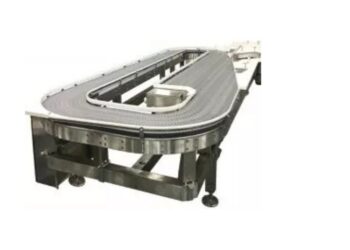
Nowadays, efficiency is not a luxury in the hectic industrialized world but rather a necessity. The manufacturing, logistics, and distribution companies are always trying to find new methods of streamlining their processes, reducing expenses, and increasing productivity.
The automated conveyor system is one of the most revolutionary developments. Much more than the rudimentary belt conveyors of the past, the contemporary systems have incorporated robotics, sensors, and innovative software to transport materials automatically through all production steps.
They are essential whether it is transporting raw materials, packaging a finished good, or managing the inventory of the warehouse setting.
Further, the implementation of an automated conveyor system has many more distant benefits than increased speed, as industries go automated in the effort to stay competitive. Also, automated conveyor systems are known to reduce human error, improve safety, and enable scalability.
This article explores the seven significant benefits that make an automated conveyor system indispensable in the industry today.
1. Enhanced Operational Efficiency
Firstly, an automated conveyor system has a significant impact on enhancing operational efficiency. Companies can save time and labor that is used in the manual movement of materials and products, and automation of movement can help to eliminate the time and labor.
Consequently, the production lines run quicker and with greater reliability. The accuracy of the system enables the goods not to go through any step of the manufacturing process, and hence the wastage of time by employees in human delays or exhaustion during production.
Moreover, these systems, in conjunction with sensors and tracking technology, can dynamically raise and lower speeds and routes due to real-time information.
2. Reduced Labor Costs
Besides reducing efficiency, automated conveyor systems also result in significant job cost savings. Handling of materials is usually a labor-intensive task, especially when the production is high and manual.
But through automation, employers will be able to redeploy the human workforce in the companies in repetitive and physically demanding work to more strategic activities that are more useful. Such a shift reduces payroll costs and also increases employee morale and employee retention.

3. Improved Accuracy and Quality Control
Automated conveyor systems are accompanied by impressive gains in accuracy and quality control.
The automated systems are run within stringent pre-programmed parameters to ensure high levels of consistency. An example is that the automatic sensor and vision systems can be used to weigh, sort, or inspect products during transit.
In case of any defect or misalignment, the system can eliminate the product from the line automatically. Such a continuous oversight process not only improves the quality of products but also reduces wastage and rework.
4. Increased Workplace Safety
Safety at work is significantly enhanced through the automated conveyor systems installed. Material handling, when performed manually, often subjects the employees to different forms of risks such as lifting injuries, slips, and repetitive strain disorders. These hazards can be significantly minimized by the automation of these processes in companies.
The modern conveyors possess high-standard safety elements like the emergency stop system, protective shields, and motion sensors, which instantly signal against any obstruction or unsafe situations. Consequently, pre-accidents are avoided.

5. Better Space Utilization
Another advantage of automated conveyor systems that should not be disregarded is the capability to maximize the use of space in the warehouse. Every square foot matters in a lot of facilities, and effective layout design can make a tremendous difference in the workforce.
The conventional manual techniques typically need wide aisles and spacious open spaces. In comparison, automated systems can be designed to be easily fitted within open space. As an example, conveyors may be overhead, wall-mounted, or even inter-floor. This is because this flexibility enables companies to release functional floor space to storage, production, or assembly.
Besides, system designs with modularity allow them to be easily reconfigured based on business requirements or expanded. Thus, businesses can use the available space to their full capacity without the need to spend money on space renovation or relocation.
6. Scalability and Flexibility
Scalability is one of the vital elements in ensuring efficiency as the business needs keep changing. Luckily, automated conveyor systems have been designed in a flexible manner. They are easily upgradable, extendable, or can be modified to suit new products, increased volumes, or even new production needs.
Also, as the IoT-enabled technologies and data analytics are integrated, these systems can dynamically respond to the changes in demand. As an example, the system can automatically provide more capacity and speed.
Such flexibility makes sure that the businesses are nimble and elastic to market changes. That is to say, automation expands along with your business scale.
7. Data-Driven Insights and Predictive Maintenance
Finally, among the most disruptive benefits of the current automated conveyor systems is their data-driven functionality. These systems have intelligent sensors and programs that constantly measure the performance indicators, including speed, load, and energy consumption.
In the long run, it can turn into an analysis of such information that would reveal inefficiencies, anticipate maintenance requirements, and maximize overall performance. Predictive maintenance, in its turn, enables businesses to demonstrate the possible problems before they lead to breakdowns.
As a result, maintenance will be proactive and not reactive, which saves time and money. Besides that, the strategic decisions based on the valuable data collected in the course of operations can be made to ensure that the managers are able to refine the processes as well as enhance long-term productivity.

In Conclusion
Installing an automated conveyor system is much more than a technological improvement; it is an investment in operational excellence. These systems transform the movement of materials and products throughout the entire production process, whether their focus is on increasing efficiency and decreasing labour costs, guaranteeing accuracy, safety, and scalability.