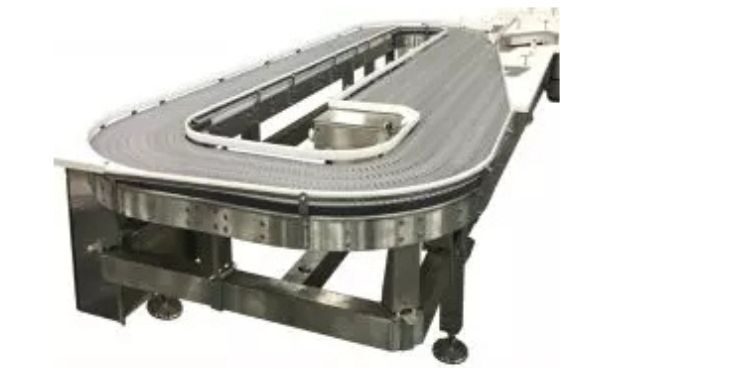

Conveyor systems are mechanical material handling equipment that automatically transport products through your facility. Small businesses typically need them when processing 500-1,000+ units daily, with systems ranging from $2,000 for basic gravity conveyors to $250,000+ for fully automated solutions. Most operations see ROI within 6-24 months through reduced labor costs and increased throughput.
As your small business grows, manual material handling becomes a critical bottleneck. Whether you’re running an e-commerce fulfillment center, manufacturing operation, or distribution warehouse, understanding conveyor systems is essential for scaling efficiently. This guide covers everything from cost analysis to implementation timelines, helping you determine if conveyor automation makes sense for your operation.
What Are Conveyor Systems For Small Business?
What is a conveyor system? A conveyor system is mechanical equipment that moves materials, products, or packages from one location to another with minimal manual intervention. These systems serve as the arteries of production facilities, eliminating repetitive lifting and carrying while maintaining consistent throughput rates.
Types of Conveyor Systems
Small businesses typically choose from four main conveyor types. Roller conveyors use cylindrical rollers to move products and come in both powered and gravity-fed versions, costing $500-$3,000 per 10-foot section. Belt conveyors utilize continuous belts ideal for lighter products or inclined movement, ranging from $5,000-$25,000 per section. Accumulation tables provide circular or rectangular platforms where products collect before moving to the next station, priced at $5,000-$25,000. Chain conveyors handle heavy-duty applications like pallet movement, typically running $10,000-$50,000+, depending on capacity.
Learn more about optimizing your warehouse layout planning to accommodate conveyor systems.
When Your Business Needs Them
The decision to invest in conveyors depends on clear operational indicators. If you’re processing more than 500-1,000 units per day with manual handling, you’re likely losing money on labor costs. For e-commerce operations, this threshold drops to 200-300 orders daily. Watch for these warning signs: labor costs growing faster than revenue, regular bottlenecks where one station waits for another, increasing product damage during manual transfers, employee injuries from repetitive lifting, or turning down larger orders due to capacity constraints. Watch for these warning signs: labor costs growing faster than revenue, regular bottlenecks where one station waits for another (where accumulation tables can provide buffer zones), and increasing product damage during manual transfers.
Pro Tip: Visit 2-3 existing conveyor installations in similar industries before purchasing. Most suppliers will arrange site visits to help you see systems in action and ask operators about real-world performance.
Cost Breakdown And Investment Planning
System Pricing by Type
Understanding true costs requires looking beyond equipment purchase prices. Basic gravity roller conveyors cost $500-$3,000 per 10-foot section, making a simple 30-foot line $2,000-$8,000 total. Powered belt or roller conveyors run $5,000-$25,000 per section, with a modest 50-foot production line costing $15,000-$50,000. Accumulation systems range from $10,000-$50,000 depending on size, with premium zero-pressure accumulation reaching $75,000-$100,000. Complete integrated systems for small to mid-sized operations typically cost $50,000-$250,000+.
According to the U.S. Small Business Administration, equipment financing can help businesses acquire necessary assets while preserving working capital.
Hidden Costs to Budget For
Installation adds 15-30% of equipment cost to your budget. Electrical work for dedicated circuits and panels runs $2,000-$10,000. Annual maintenance consumes 5-10% of the purchase price. Staff training costs $1,000-$3,000. Facility modifications can range from minor ($5,000) to substantial ($25,000+), depending on floor reinforcement, wall penetrations, or HVAC adjustments. Used equipment offers 40-60% savings but requires careful inspection and typically provides limited warranty coverage.
Explore equipment financing options to spread costs over time while preserving cash flow.
Calculating ROI And Payback Period
ROI Formula for Small Business
What is the typical ROI on conveyor systems? The typical ROI payback period ranges from 6-24 months for well-planned implementations. Systems with payback under 12 months are considered excellent investments, while anything over 36 months suggests over-investment for your current scale.
Calculate your ROI using three primary factors. Labor savings drive the greatest returns—if two full-time workers at $15/hour ($62,400 annually) primarily move products and conveyors eliminate 1.5 positions, you save approximately $40,000 annually after accounting for one reduced-hour operator. Throughput improvements typically increase processing speed by 25-40%. If you currently process 800 units daily and increase to 1,100 units at $20 profit per unit, those extra 300 daily units represent $1.5 million in additional annual profit potential. Damage reduction matters too—reducing handling damage from 2% to 0.3% saves 1.7% of production value, or $34,000 on $2 million in annual production.
Did You Know? Conveyor systems typically reduce material handling labor by 40-60%, often eliminating 1-2 full-time positions per production line while increasing throughput by 25-40% simultaneously.
Choosing Between Gravity And Powered Systems
Gravity Conveyor Applications
Gravity conveyors offer simplicity and economy. They require no electricity, need minimal maintenance, and cost significantly less upfront ($500-$3,000 vs. $5,000-$25,000 for powered sections). The trade-offs include requiring sufficient slope (1-3 degrees), working only with products having flat, stable bottoms, and providing limited control over speed and flow. Best applications include receiving docks, simple product flow between adjacent stations, temporary or seasonal operations, and budget-constrained startups needing an entry-level solution.
Powered Conveyor Benefits
Powered conveyors justify their higher cost through precise speed control, flat surface operation (or even uphill), ability to handle varying product sizes and weights, and easy integration with automated systems. They excel in high-volume operations, applications requiring precise timing, complex routing needs, accumulation zones, and situations demanding consistent speeds regardless of product weight. This makes them the growth-stage investment for businesses scaling beyond basic material handling.
The Material Handling Institute provides technical resources on conveyor selection and implementation best practices.
Implementation And Installation Guide
Timeline and Planning
Installation timelines vary significantly by system complexity. Basic gravity systems require just 1-2 days for straight runs. Standard powered conveyors take 3-5 days for a 50-foot line with basic controls. Accumulation systems need 1-2 weeks depending on sophistication. Complex integrated systems with multiple conveyors, turns, and accumulation zones require 2-4 weeks. Custom designs add 6-12 weeks for engineering and fabrication before installation begins. Plan for operational downtime by scheduling installations during slow periods and maintaining manual processes as backup during testing and optimization phases.
Selecting the Right Supplier
Choose suppliers with a minimum 5-10 years of industry experience, preferably with clients in your specific sector. Verify they offer in-house installation capabilities or reliable contractor networks, local service technicians with 24/7 emergency support for critical operations, stock common parts locally with guaranteed 10+ year availability, and provide engineering support, including CAD drawings and specifications. Request 3-5 customer references in similar applications. Critical questions include average service call response times (should be same-day for emergencies), staff training provisions, warranty terms (minimum 1 year parts and labor), detailed project timelines, performance guarantees, and preventive maintenance contract options.
Include conveyor systems in your business growth planning with a three-year equipment roadmap showing phased implementation as volumes increase.
Making Your Decision
Conveyor systems represent a strategic investment that transforms operational efficiency and enables sustainable growth. Success depends on carefully calculating ROI before purchasing, choosing suppliers based on service capability rather than price alone, and planning for scalability from day one. Start by measuring your current throughput, labor costs, and bottlenecks to determine if you’re at the 500-1,000+ unit daily threshold where conveyors make financial sense.