


Old plate processing equipment has a way of feeling “good enough” right up until it isn’t. Repair bills creep up, plates spend longer waiting in line, and a competitor starts winning work you would have landed two years ago, which raises the real question: how do you know when it’s time to upgrade your plate processing equipment?
Upgrade your plate processing equipment when the combined cost of downtime, repairs, rework, and lost orders exceeds what a new machine would cost you over the same period.
Many owners never run that math, which is why plenty of plate shops keep their equipment running long after it has stopped paying for itself. Once you know which numbers to pull, the decision gets a lot less emotional and a lot more obvious.
The Real Cost of Running Old Plate Processing Equipment
Aging plate processing equipment rarely fails all at once. It costs you in smaller ways: a few extra hours of downtime each month, a technician on call just to keep one cutting table running, and scrap that creeps up as tolerances drift. Operators also lose time on manual upkeep, like cleaning and recalibrating cutting parts by hand, that a newer machine may handle on its own.
None of that shows up as “equipment problem” on a profit and loss statement. It shows up as higher labor costs, thinner margins, and wasted plate, and owners tend to treat each one as a separate issue instead of symptoms of the same cause. Add up maintenance contracts, overtime to hit deadlines, and the cost of reworked parts, and the “paid off” machine can be quietly more expensive than a financed new one.
Signs Your Plate Processing Setup Is Holding Back Growth
Cost is not the only signal. Capability limits growth just as often as cash flow does. For a metal fabrication business that works with plate, a few patterns are worth watching for:
- You are turning down jobs because of the material, thickness, or tolerance your current plate processing equipment cannot reliably handle.
- Lead times keep stretching because one cutting machine has become the bottleneck for the whole shop.
- The machine sits idle while operators swap plates or stop to service it.
- Customers ask for tighter tolerances or faster turnaround that your equipment was not built to deliver.
Any one of these is manageable. Two or three at once usually means the equipment, not the market, is setting the ceiling on how big your business can get.
What Modern Plate Processing Equipment Actually Changes
It is easy to assume new plate processing equipment simply cuts the same plate faster. In practice, the bigger shift is usually in consistency and visibility. Newer machines pair higher power and precision with software that manages the process, so results depend less on operator judgment alone.
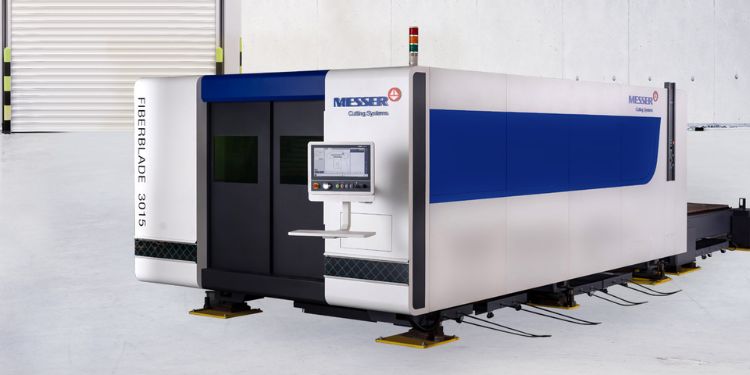
Fiber laser cutting is a good example. A system like the fiber blade VI from Messer is suitable for cutting all types of metal plates, including carbon steel, stainless steel, and aluminum, with laser power options up to 20 kW. The manufacturer lists a positioning accuracy of ±0.03 mm per meter and repeatability of ±0.01 mm, which matters when rework is one of your biggest hidden costs. It also has a heavy-duty hydraulic exchange table with short exchange times and automatic nozzle cleaning and calibration, both aimed at maximizing uptime and keeping cut quality consistent, and it is designed for continuous 24/7 production.
The software side matters just as much to a business owner. The nesting software, OmniWin, plans efficient cutting paths to produce more parts from the same plate, which lowers your material cost. OmniFab integration ties the machine into a digitized production workflow with real-time management, control, and monitoring, so you can see throughput without walking the floor. That is exactly the information you need to judge whether a machine is earning its keep.
How to Build the Financial Case for New Plate Processing Equipment
Once you suspect an upgrade makes sense, the case has to hold up in numbers your accountant or lender will accept, not just gut feel. A simple version looks like this:
- Total the last 12 months of repair costs, unplanned downtime hours (valued at your shop rate), and rework tied to the plate processing machine in question.
- Estimate the revenue you turned away because the equipment could not handle the job or the schedule.
- Compare that annual total against the financed monthly payment on a replacement, including any efficiency or labor savings the new equipment would deliver.
This is a rough model, not a forecast, but it turns a vague feeling into a number you can defend to a partner, a lender, or yourself. Financing terms and tax treatment vary, so it is worth talking with your accountant before you assume a new machine is out of reach.
Questions to Ask Before You Buy Plate Processing Equipment
A strong financial case can still lead to the wrong purchase if you skip the vendor evaluation. Before signing anything, get clear answers on:
- What service and parts support looks like, including response time and whether it is local.
- What operator training is included, and how long the ramp-up to full productivity takes.
- The five-year total cost of ownership, with consumables and energy included, not just the sticker price.
- Whether the equipment works with your nesting software, inventory systems, and plate handling setup, or creates a new manual step.
The machine with the best spec sheet is not always the best fit if the support behind it is thin.
Run Your Numbers Before You Shop
You do not need to make a purchase decision this week, but you do need real numbers. Pull your last 12 months of repair invoices, downtime logs, and turned-down orders, and total up what your current plate processing equipment is actually costing you. Once you have that figure, comparing manufacturers’ spec sheets and brochures becomes a lot more meaningful.


