
Your website may already be generating more leads than you realize.
Potential customers visit your articles, service pages, pricing pages, and other content every day. Most leave without completing a form or contacting you.
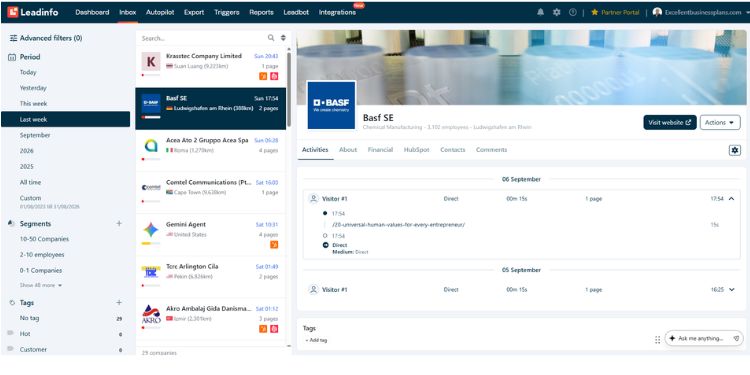
For B2B businesses, however, these visits can provide useful sales signals. By identifying which companies visit your website, you can find potential customers, understand their interests, and focus your sales efforts on businesses already showing interest.
Here is how to turn company website visits into a practical lead-generation process.
1. Identify companies visiting your website
Traditional website analytics can tell you how many people visit your website, which pages they view, and where they come from. B2B visitor identification goes one step further by helping you identify some of the companies behind those visits.
For example, imagine you provide HR consulting services. A company visits an article about employee retention, then views your HR consulting service and pricing pages. Nobody completes your contact form, but this activity may still indicate a potential business need. Identifying the company gives you a starting point for further research.
2. Look at what the company is interested in
Knowing the company name is not enough. Look at what visitors actually do on your website.
Useful signals can include:
- Visiting a product or service page
- Looking at pricing
- Reading several related articles
- Viewing case studies
- Returning to your website
- Visiting your contact page
The combination of these activities can indicate how interested a potential customer may be.
A company that reads one general article is probably less interesting than a company that returns several times and visits your main service pages.
3. Check the company against your ideal customer
Not every company visiting your website is a good lead.
Compare each promising company with your Ideal Customer Profile (ICP). What is an Ideal Customer Profile?
Look at factors such as:
- Industry: Is the company active in a market you serve?
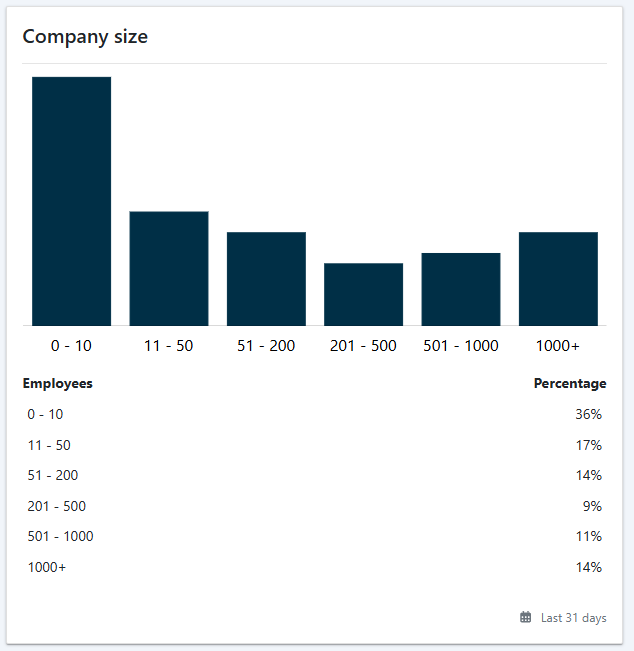
- Company size: Is it large enough—or small enough—to benefit from your offer?
- Location: Can you serve customers in its country or region?
- Business need: Is there a clear problem your product or service could help solve?
This prevents your sales team from spending time on companies that are unlikely to become customers.
4. Score the strongest leads
A simple lead score can help you decide which companies deserve attention.
For example:
- Target industry: +20 points
- Ideal company size: +20
- Target country: +10
- Service page visit: +10
- Pricing page visit: +20
- Returning visitor: +10
- Contact page visit: +10
You do not need a perfect scoring model. Start simple and improve it as you learn which types of companies actually become customers.
The basic principle is:
Company fit + website interest = stronger lead
AI Prompt: Score and Prioritize Your B2B Leads
Sample prompt: ‘Score each identified website visitor/company from 0–100 based on company fit and buying intent: target industry +20, ideal company size +20, target country +10, service/commercial page +10, pricing/advertising/partnership page +20, returning visitor +10, and contact page +10. Research missing company information, score only supported signals, rank companies highest to lowest, and show Company, Score, Best-Fit Offer, Reason, and Recommended Sales Action, prioritizing companies that combine strong ICP fit with clear buying intent‘.
Copy and paste your identified companies into this prompt to quickly prioritize the best opportunities for outreach.
5. Research the company
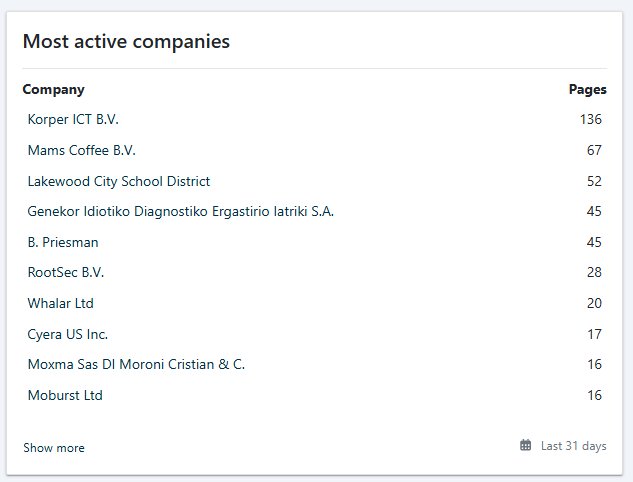
Before contacting a potential lead, spend a few minutes understanding the business. Visit its website. Look at its products, customers, size, locations, and recent developments. Consider why the company might be interested in your solution.
Next, identify the person who is most likely to be responsible for the problem you solve. Depending on your offer, this could be the business owner, marketing manager, finance director, HR manager, or operations manager.
This turns an anonymous website visit into a qualified company you can evaluate.
6. Use the information for relevant outreach
Company visitor information should be treated as a sales signal, not an excuse for aggressive outreach.
Avoid messages such as:
“We noticed that someone from your company visited our pricing page yesterday.”
Instead, use the information internally to decide which companies may be worth approaching.
Research the company and send a relevant introduction based on its likely business needs. Your message should explain the problem you solve and why your solution could be useful.
Also make sure your lead-generation and outreach activities comply with relevant privacy, data protection, and direct-marketing requirements.
Using Leadinfo for B2B lead generation
Doing this manually can be difficult because standard analytics platforms usually focus on users and sessions rather than identifying businesses. B2B visitor identification platforms can help automate part of the process.
One example is Leadinfo. It helps businesses identify companies visiting their websites and provides insights into the pages those companies view. You can then build a simple process:
Website visitor → Company identified → Company profile checked → Behavior reviewed → Lead scored → Contact researched → CRM → Outreach
The goal is not to contact every company visiting your website.
Instead, focus on the businesses that both match your ideal customer profile and show meaningful interest.
This makes website visitor identification a useful addition to your wider B2B lead-generation process—and helps turn existing website traffic into potential business opportunities.