Build your moat: How to use partnerships & business ecosystems as a competitive advantage
The era of the “lone wolf” entrepreneur is over. Learn how to bundle services, leverage partners, and build a defensible business ecosystem.
Stop competing alone. Learn how to build a business ecosystem, leverage strategic partnerships, and use bundling to create a defensible competitive advantage.
Introduction: Stop trying to win alone
In the traditional view of business, every other company is a competitor. You fight for market share, you fight for attention, and you fight to keep your margins. It’s a lonely, exhausting battle.
But the most successful modern businesses don’t operate as islands. They operate as ecosystems. They don’t just sell a product; they build a network of partners, suppliers, and complementary services that make them impossible to replace.
This is the concept of the “Business Ecosystem,” a term popularized by strategist James F. Moore. He argued that businesses co-evolve and that long-term success comes from cooperation, not just competition.
By building an ecosystem, you create a “moat”, a defensive barrier that protects your profits and locks in your customers. This guide will show you how to move from a lone wolf to an ecosystem builder.
The power of the ecosystem: The data
Why should a small business care about “ecosystems”? Because the data shows that collaboration is the new competitive advantage.
- Revenue Growth: According to Accenture, the “Ecosystem Masters” project experienced revenue growth of 4.6%, which is nearly double the 2.9% growth projected by their peers.
- Partnership Impact: A study by the BPI Network found that 57% of companies use partnerships to acquire new customers, and 44% use them to gain new ideas and innovation.
- Competitive Advantage: Ecosystems are a powerful defense. Accenture’s research shows that companies that master ecosystems are 2.5x more likely to be disruptors in their industry rather than the ones being disrupted. (All Statistics Verified)
4 Strategies to build your business ecosystem
You don’t need to be a tech giant to build an ecosystem. You just need to change how you view your relationships. Here are four practical strategies to “reconfigure” your business.
Strategy 1: Bundle & Unbundle (The Offer Strategy)
Instead of selling a single product, combine your services with a partner’s to create a “solution.” This makes you unique.
- The Concept: Customers don’t want “ingredients”; they want a “meal.” Bundling saves them time and reduces their risk.
- Example: A freelance web designer usually competes on price. But if she partners with a copywriter and an SEO expert, they can sell a “Complete Business Launch Package” for $5,000.
- Why it Works: It’s harder to copy. A competitor might beat your design price, but they can’t easily replicate your trusted 3-person team.
Pro Tip: Business Model Stacking
Don’t just bundle products; bundle business models. This is called Business Model Stacking.
For example, you might run a Service model (consulting) alongside a Subscription model (maintenance retainer) and an Affiliate model (software referrals). Stacking creates multiple revenue streams, diversifying your risk and optimizing your tax and administrative leverage.
Strategy 2: Forward & Backward Integration (The Control Strategy)
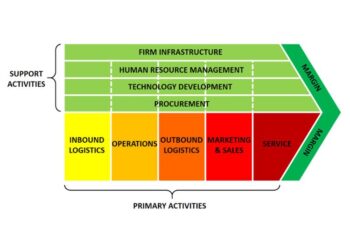
This is a classic strategy from Michael Porter’s Value Chain. It means expanding your control over the supply chain, either moving closer to the customer or closer to the source.
- Forward Integration (Downstream): You stop being a commodity supplier and start owning the customer relationship.
- Example: A coffee roaster who stops just selling wholesale beans and opens their own cafe or direct-to-consumer website.
- Backward Integration (Upstream): You take control of your supply or manufacturing to protect your margins.
- Example: Netflix. They started as a distributor of other people’s movies. To build a moat, they integrated backwards to become a production studio (Netflix Originals), owning the content itself.
- Why it Works: You capture more margin and stop relying on “middlemen” or suppliers who could raise prices.
Strategy 3: Strategic Partnering (The Moat Strategy)
A “moat” is a defense that keeps competitors away. Strategic, exclusive partnerships are one of the strongest moats a small business can build.
- The Concept: Lock in the best partners so your competitors can’t use them.
- Example: A wedding venue signs an exclusive agreement with the city’s most popular caterer. If a couple wants that specific food (which is in high demand), they must book that venue.
- Why it Works: You are borrowing your partner’s brand equity. Their popularity becomes your competitive advantage.
Strategy 4: Vendor Management & The “Make or Buy” Decision
You can’t do everything. A strong ecosystem relies on smart Vendor Management. You need a clear rule for what to keep in-house (“Make”) and what to source from partners (“Buy”).
- The Framework: Ask yourself, “Is this activity my core competitive advantage?”
- If YES (e.g., your secret sauce): Make it. Keep strict control.
- If NO (e.g., delivery, payroll, cleaning): Buy it. Sourcing this from a specialist partner is usually cheaper and better.
- Note: “Buying” doesn’t always mean acquiring a company (M&A). For most small businesses, it simply means finding a reliable vendor or partner rather than trying to build the capability yourself.
Comparison: Lone Wolf vs. Ecosystem Builder

How does this shift look in practice?
| Feature | The “Lone Wolf” Business | The “Ecosystem” Business |
| Focus | Beat the competition. | Collaborate to expand the market. |
| Offer | Single product or service. | Integrated solution (Bundle). |
| Growth | Linear (sells one by one). | Exponential (leverages partner channels). |
| Risk | High (bears all costs alone). | Shared (distributes risk with partners). |
| Value | Transactional. | Relationship-based. |
“In the future, competition will not be between companies, but between ecosystems.” – James F. Moore
Final thoughts
Stop trying to win alone. The smartest founders know that their business doesn’t end at their four walls. By building a network of partners, bundling your services, and strategically integrating with your value chain, you build a business that is resilient, defensible, and valuable.
Your Next Steps:
- Identify 3 complementary businesses that serve your exact customer.
- Propose a “Bundle” offer (e.g., “If you buy my X, you get 10% off their Y”).
- Review your costs: Are you “making” something you should be “buying” from a partner?
Ready to map out your ecosystem? Download our complete Business Plan Template to visualize your partners and value chain today.
Frequently asked questions (FAQ)
- What is a business ecosystem?
It is a network of organizations, including suppliers, distributors, customers, competitors, and government agencies, involved in the delivery of a specific product or service. Like a biological ecosystem, each entity affects and is affected by the others. - What is forward vs. backward integration?
Forward integration is moving closer to the customer (e.g., a farmer opening a farm stand). Backward integration is moving closer to the source (e.g., a restaurant buying a farm). Both are ways to control more of the value chain. - How do I find a strategic partner?
Look for “value chain neighbors.” Who serves your customer before or after you? If you are a wedding photographer, your neighbors are venues (before) and album printers (after). These are your ideal partners. - What is the “Make or Buy” rule?
The rule is simple: If an activity creates your unique competitive advantage, make it (do it in-house). If it is a generic utility that doesn’t differentiate you, buy it (outsource it) to save focus and capital.
References
- Moore, J. F. (1996). The Death of Competition: Leadership and Strategy in the Age of Business Ecosystems. (The foundational text for this concept).https://www.amazon.com/Death-Competition-Leadership-Strategy-Ecosystems/dp/0887308503
- Porter, M. E. (1985). Competitive Advantage: Creating and Sustaining Superior Performance.https://www.amazon.com/Competitive-Advantage-Creating-Sustaining-Performance/dp/0684841460
- Accenture. (2018). Three things ecosystem experts get right https://www.accenture.com/content/dam/accenture/final/a-com-migration/r3-3/pdf/pdf-87/Accenture-AS-Three-Things-Ecosystem-Masters-Get-Right-POV.pdf
- BPI Network. (2020). Grow From the Right Intro. https://www.bpinetwork.org/thought-leadership/studies/51